Mandy Barker

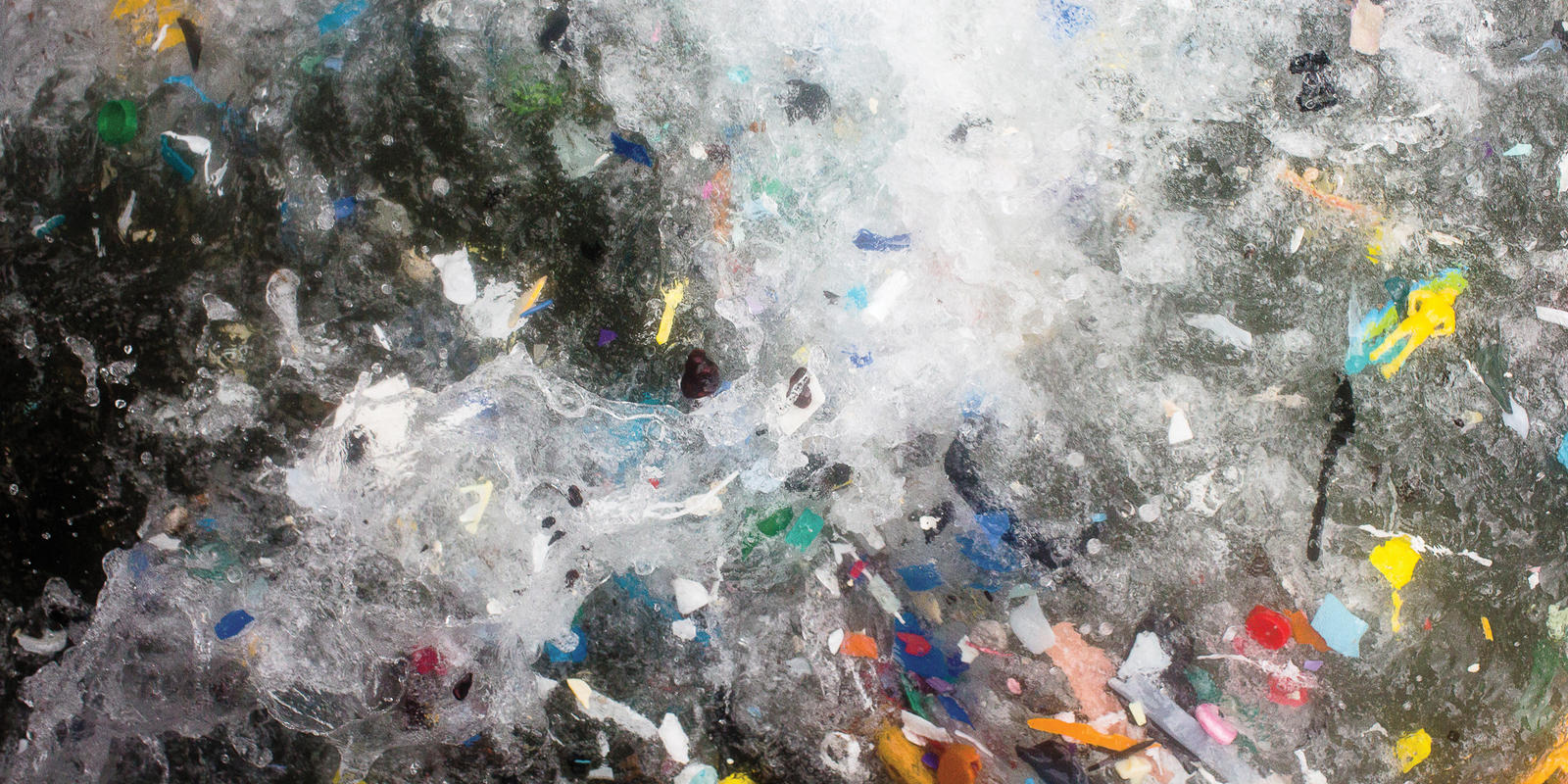
Mandy Barker is a British photographer, one of her most famous series is ‘SOUP’ a name given to plastic debris in a area in the Pacific Ocean which is known as the ‘Garbage Patch’. The series includes images that are aimed at being engaged with and gain an emotional response from it’s viewers with the contrast in the initial aesthetic of the images and the social awareness.

Image result for mandy barker soup
SOUP | Mandy Barker

All the plastics used in the images were salvaged from beaches around the world in order to represent a global collection of waste and bring awareness the issue at hand. As seeing the amount of waste used for the series only proves just how much waste is produced.

I want people to be shocked by what they seen in my images and to think of their own plastic consumption” Mandy stated in National Geographic, claiming that her work would have only fulfilled it’s purpose if it got people to think about the matter at hand – “If people remember what they have seen in my work, when they are brushing their teeth and remember seeing or reading about a toothbrush found in an albatross chick, then this will have reached my aim

Image result for mandy barker soup
SOUP- 500+ | Mandy Barker

One of the images in the series titled ‘500+’ is made up of over 500 pieces of plastic debris that was found inside the digestive tract of a albatross chick in the North Pacific Gyre. Unlike the other in the images in the series, this compact arrangement of debris represents severity of marine wildlife consuming said waste.

Mandy first began this journey in 2012 after she was a part of an expedition to the Great Pacific Garbage Patch to track debris from the 2011 Japanese tsunami. The crew who accompanied her were a mixture of scientists and laypeople who were studying how materials such as plastic move through the ocean and how long they take to decompose as well as how they’re colonised by marine life.

Whilst aboard the ship, one of the crew members began telling her about Hong Kong’s issue with plastic bags which moved Mandy, “I knew there and then that this would be my next project” she said.

In 2013 she visited Hong Kong to speak at an environmental conference, however she came prepared. Although it was a ten-day trip, that was plenty of time as she managed to salvage the majority of the waste used in series in the course of those ten days, which only proves that our waste is a bigger problem than we care to admit.
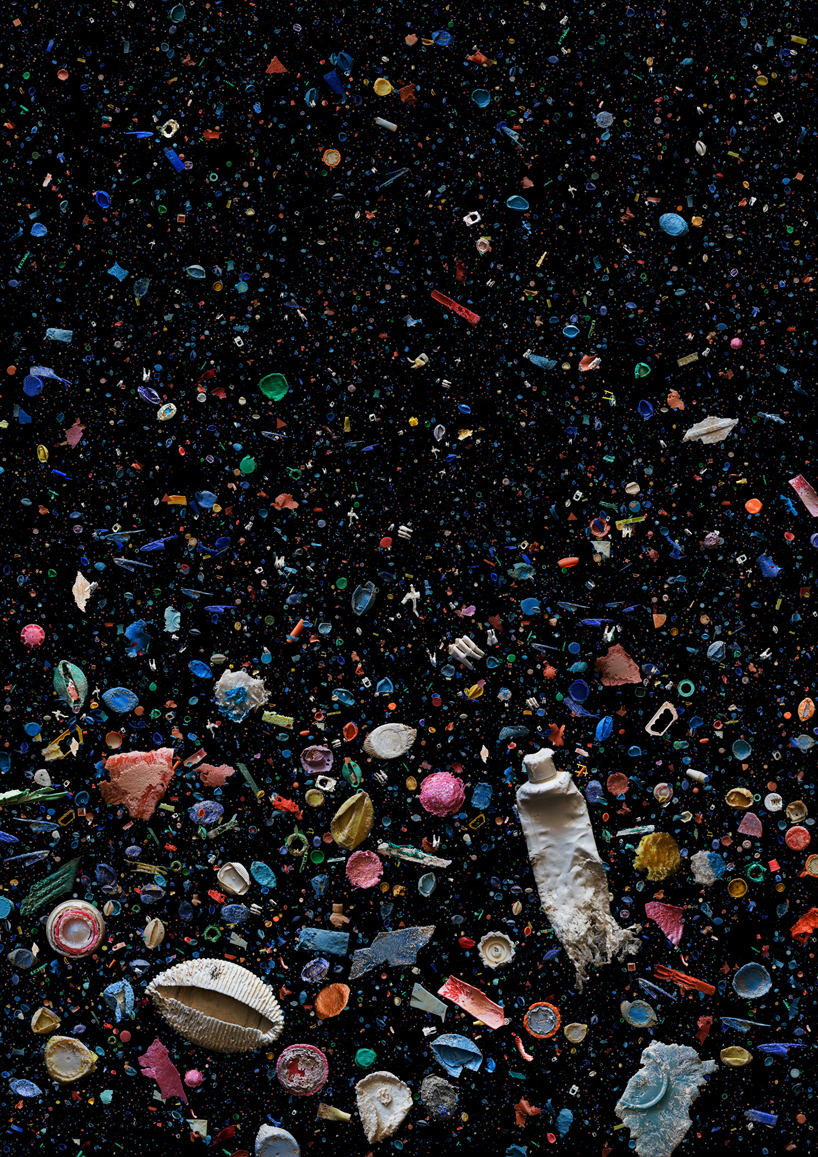
Image result for mandy barker soup
SOUP- Refused | Mandy Barker

During the beginning, she simply took photos of the waste on the beach. However nobody seemed interested, “They had seen these sorts of images before, and it didn’t hold their attention” instead of losing motivation, she decided to get more creative by sorting the waste into groups: action figures, artificial flowers and plastic rice packets.

After that, she began to arrange them ever so slightly – smaller pieces first, medium sized pieces followed by the larger ones. Her goal was to make the images have enough beauty to gain people’s attention however, she then wanted them to wonder what they’re made of as well as the meaning behind it.

Image result for 276 inside out mandy barker
276 inside out | Mandy Barker

A commissioned piece named ‘276 Inside Out’ was an image she took of the 276 pieces of plastic recovered from the stomach of a albatross chick from the Midway, 2012. This image’s story truly puts into perspective of just how much the wildlife consumes. A single chick consumed 276 pieces of plastic.

Chris Jordan

Image result for chris jordan photography plastic
Midway: Message from the Gyre| Chris Jordan

Chris Jordan is an American artist and photographer – many of his pieces are created from photographs of garbage. Some of his work includes;

Intolerable Beauty: Portraits of American Mass Consumption‘ which was a series from 2003 to 2006, various large format photographs depicting the severity of America’s waste and consumption.

In Katrina’s Wake: Portraits of Loss from an Unnatural Disaster‘ which was a series in 2005, a series of images depicting the aftermath of Hurricane Katrina.

Running the Number I: An American Self Portrait‘ which was a series of photographic mosaics , visualisations of statistics to America’s
consumerisms, social issues and addictions.

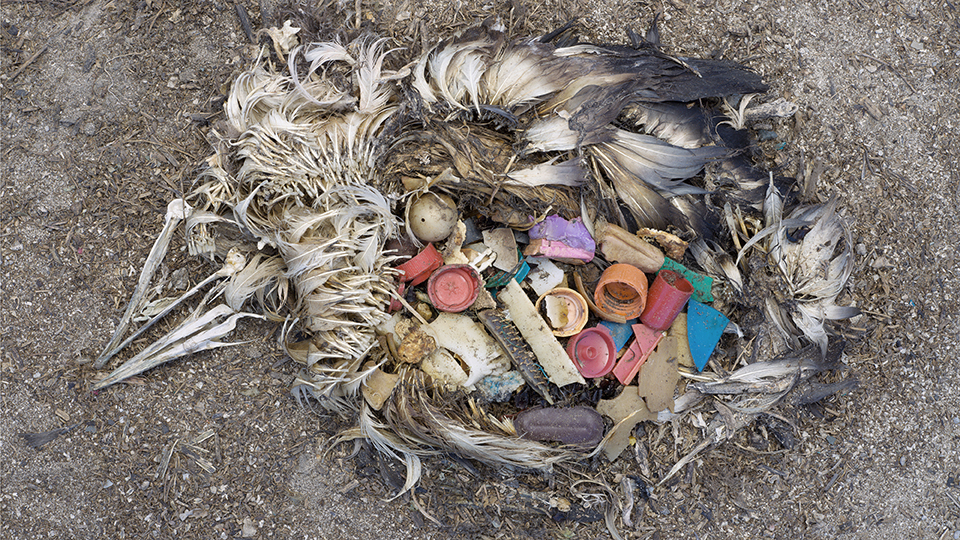
Midway: Message from the Gyre‘ is one of his more recent series which took place from 2009 to 2013 where he photographed rotting carcasses of baby Albatrosses who were filled with plastic.

In ‘Midway: Message from the Gyre‘ the baby Albatross had been filled with plastic due to their parents mistakenly feeding their offspring with waste they had found floating in the ocean, mistaking it for food. This lead to the gruesome images such as the one above, however in 2012 Chris funded a Kickstarter which gained over $100,000 of donations after he began to create a documentary project. There had been little activity regarding the project – since 2014, although it started to be “in progress” in 2016 and by 2017 it had been finished and being screened in select locations.

Related image
Midway: Message from the Gyre | Chris Jordan

As I have previously stated, images like this might be quite morbid or gruesome, as such, however they truly do help people see just how much damage waste is doing to the environment. Series such as this help depict the severity of the waste – as yes, people are aware that animals consume the wastage that lies in the ocean and on the shorelines, however we never see it with our own eyes therefore it is almost “out of sight, out of mind” which is truly upsetting.

People also fail to see how quickly we are killing our own planet. Some people have the mindset of “I won’t be alive, so I don’t care what happens to it” a very toxic and sad mindset to have, but there are still a large portion of the population who want to help save out planet and the life living upon it – we still can save it, there is still time to try and reduce the amount of waste that is not only produced, but dumped in the ocean.

Image result for chris jordan photography plastic
Midway: Message from the Gyre | Chris Jordan

To put it in perspective;

In 1950s – the world’s population of 2.5 billion produced 1.5 million tons of plastic. Then in 2016, the world’s population of 7 billion people produced over 320 million tons of plastic. This is set to double by 2034.

There may be around 5.25 trillion macro and microplastics in the open ocean – weighing up to 269’000 tons.

Over 100’000 marine mammals and turtles, and 1 million sea birds are killed by marine plastic pollution every year.

Over 150 plastic bottles litter each mile of UK beaches and approximately 5,000 items of marine plastic pollution have been found per mile of the beaches in the UK.

This is just a few of the many, many statistics about pollution. When people often think about the consequences of pollution, they think a couple hundred years – when in reality it is quite the contrary, it could be as close as 2034 – 2050 and some people still remain unnerved by this.

Sea Shepherd

Operation Ocean Waves | Sea Shepherd

Sea Shepherd is an organisation that carries out beach clean ups worldwide. The US branch has a campaign called “Operation Ocean Waves” in which they collect marine debris that washes up on offshore islands and in the middle of the ocean. Sea Shepherd also works with scientists to study the effects of microplastics on marine species.

In this campaign they wanted to bring awareness to – not only the issue with plastic bags in the oceans, but the severity of it. Some people are in fact aware of how dangerous plastic bags are to the environment but what they fail to take into account is how severe it is.

The posters are 3D ads, had been created in partnership between Tribal Worldwide São Paulo and DDB Guatemala. They stated that the sole purpose of creating the campaign was “bringing awareness to the fact that with small and easy steps we can ensure that terrible scenes like these do not happen

Operation Ocean Waves | Sea Shepherd

A plastic bag seems so harmless to us, however in the oceans it can cause extreme suffering – and death, to thousands of marine animals. The most commonly known animals are turtles, with people now replacing plastic straws with paper or metals ones, however they fail to see that although it is still good we are getting rid of the plastic straws, more animals die due to the plastic bags than the straws. Also, people will have their drink whilst going on about “saving the turtles” with their metal straws in their plastic cups.

Scientists warn that in 2050 there will be more plastic than fish in the sea” Sea Shepherd’s founder, Captain Paul Watson said, “Sea Shepherd is committed to preventing this from happening – because if the oceans dies, we die.

Related image
The Plastic Ocean | Sea Shepherd

The Plastic Ocean‘ is another series they released, with the same intentions as the previous one. The three posters have a dolphin, a shark and a turtle looking as though they are suffocating on the plastic sheet – yet another somewhat gruesome compared to come campaigns, however it once again makes the message very clear.

Keith Arnatt

Pictures from a Rubbish Tip | Keith Arnatt

Pictures from a Rubbish Tip‘ is a series by Keith Arnatt during the late 1980s of five large colour photographs featuring close up shots of waste that had been dumped at the local tip. In each image, the lens focuses upon various items of food such as; bread, chicken bones and vegetables.

Arnatt did this over several trips. He did not use any artificial lighting when doing the shoot, he relied on the daylight alone and focusing the lens sharply on the closest part of the featured item. as well as using an extremely shallow depth of field.

Pictures from a Rubbish Tip, 1988-89
Pictures from a Rubbish Tip | Keith Arnatt

Since the waste lies on pale plastic, it helps diffuse and reflect the daylight making the photographs appear to be brightly coloured.

Arnatt believed that taking the photos from that angle and with said lighting, puts the viewer in the position in which he was when he noticed and picked up the half-buried objects.

Personally, I think that series such as this one where the shoot is quite messy get the message across more. There are plenty of campaigns about pollution and littering, but they need to appeal to advertisement therefore needing to keep it somewhat ‘clean’ however, series like this get people truly thinking about the waste they produce – and the amount of waste.

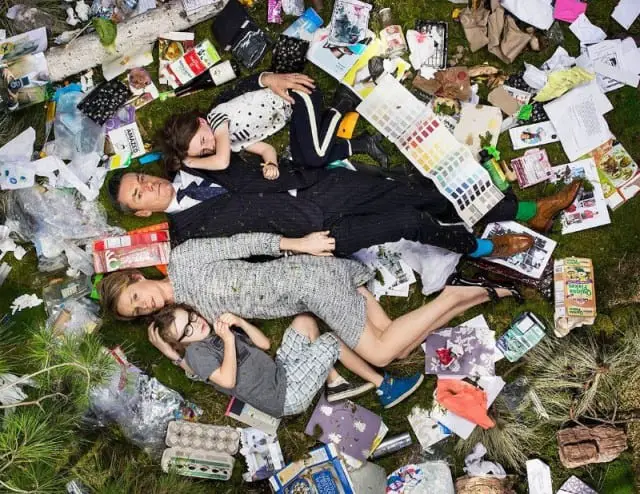
I thought the same with Gregg Segal’s series ‘7 Days of Garbage’ where he had people he knew save waste – including recyclables, for a whole week and then photographed them lying within the trash. Once again, it sends a powerful message and successfully at that.

Pictures from a Rubbish Tip, 1988-89
Pictures from a Rubbish Tip | Keith Arnatt

Gregg Segal

Image result for gregg segal 7 days of garbage
7 Days of Garbage | Gregg Segal

Segal’s approaches his work from the sensibility of a sociologist, with this he explores different cultures – identities, behaviour, oles, beliefs and values. He utilises complete contrast and juxtaposition to gain the viewer’s full attention as well as provoke reflection.

One of his most notorious series is “7 Days of Garbage” where he pictures portraits of people surrounded by garbage to bring awareness to the sheer amount of waste we produce and how it can affect the world.

Image result for gregg segal 7 days of garbage
7 Days of Garbage | Gregg Segal

Segal stated that he always wondered what would happen after we run out of places to simply dumb trash. The average American generates around 29 pounds a week meaning as a nation that is roughly 9 billion pounds a week, he also stated that he was not only concerned about the amount of waste we produce, but how oblivious we are to the matter at hand.

For the shoot, Segal asked friends, family and even neighbours to participate. They were given instructions to save their waste and recyclables for a whole week and then he’d have them lie down in said waste and photograph them.

Segal revealed that he included his family as a way to teach his 8-year-old son and make him understand that they aren’t excluded from the situation – they, too contribute to the issue at hand. Which, I feel is an important lesson to teach children as so many people seem clueless to how much damage it does to the Earth – people ignore it as it’s not affecting the area around them currently.

Pollution Statistics

In the past few years Agbogbloshie, Ghana has become a common dumping ground; hundreds of tons of e-waste ends up here every month. Out of the 20 to 50 million tons of discarded electronics, 70% will end up in poor nations, in the EU alone 6.6 million tons of e-waste are unaccounted for every year.

Increasingly, this kind of waste is finding its way to places such as:
– West Africa – Ghana
– Nigeria – Ivory Coast

Traders bypass the laws regarding waste by labelling the equipment as second-hand goods or charity donations. In reality as much as 80% of the computers sent to Ghana are broken or obsolete, the most common “last destination” is Agbogbloshie, where children pull apart the electronics to salvage copper, hard drives and other components that they can sell.

In the West the disposal of electronics is costly whereas in places where there aren’t any regulations regarding waste, there are toxic metals such as; lead, cadmium, mercury and beryllium are continuously being released causing untold damage to those who live there as well as the environment. More than 1 billion people worldwide do not have access to clean drinking water, as a result of this 5,000 people die every day. Around 1,000 children die in India due to diseases caused by the polluted water.

Around 88% of the children in Guiyu, China suffer from various respiratory diseases as the area they live in is a huge e-waste site.

The average American generates 29 pounds of garbage a week, that is 9 billion pounds per week as a nation. Approximately 46% of lakes in America are extremely polluted this is why people are told to take caution when swimming and/or fishing. The Mississippi River dumps 1.5 metric ton of nitrogen pollution in the Gulf of Mexico every year.

Composting and recycling alone have prevented 85 million tons of waste to be dumped in 2010.

The garbage dumped in the ocean annually is roughly 14 billion – plastic being the major component. More than 3 million children under the of 5 die every year due to environmental factors such as pollution.

China is the world’s largest producer of carbon dioxide, the USA being the second. Almost 80% of urban waste in India is dumped in the river Ganges. Acidification of the ocean is one of the worst types of pollution – oceans are becoming more acidic due to the greenhouse emissions from fossil fuels. Scientific research has proven that carbon dioxide emissions are lowering the pH level of the ocean which leads to the acidification of the water.

More than 100 pesticides in any medium; water, air and soil, can cause birth defects and gene mutations:
– There are more than 73 various types of pesticides in the groundwater.

Major oil spills are one the most common types of pollution as well as one of the most destructive due to how frequently they occur and the rate they spread in the water.

In the “Great Smog Disaster” in London (1952) approximately 4,000 people died in just a few days due to high concentrations of pollution. This happened due to the heavy use of coal during this time, which formed a thick layer of “smog” over the city. A period of cold weather combined with an anticyclone and windless conditions collected airborne pollutants, mainly from the use of coal.

It lasted four days, 5th of December until the 9th. However in that short amount of time, it is said there was approximately 4,000 died as a direct result of the smog and over 100,000 were made severely ill due to the effect of the smog to the human respiratory tract. A more recent search has revealed that the number of fatalities might have been greater, one paper stating that 6,000 more people died in the following months as a result from the event.

Eduardo Leal

Plastic Tree | Eduardo Leal

Eduardo Leal is a Portuguese documentary photographer based in Macau, China. He is a graduate in Journalism at Escola Superior de Jornalismo in Porto, Portugal, he also has a masters degree in Photojournalism and Documentary Photography from the London College of Communication.

From 2009 to 2014, Eduardo was a consultant to The Arpad A. Busson Foundation. He was a part of the curatorial team for the exhibitions at International Centre of Photography [ICP] in New York in 2010 and at the Garage CCC in Moscow during 2011. He is also a part of the editorial and design team on “Cuba in Revolution” book which was published by Hatje Cantz in 2013.

Plastic Tree | Eduardo Leal

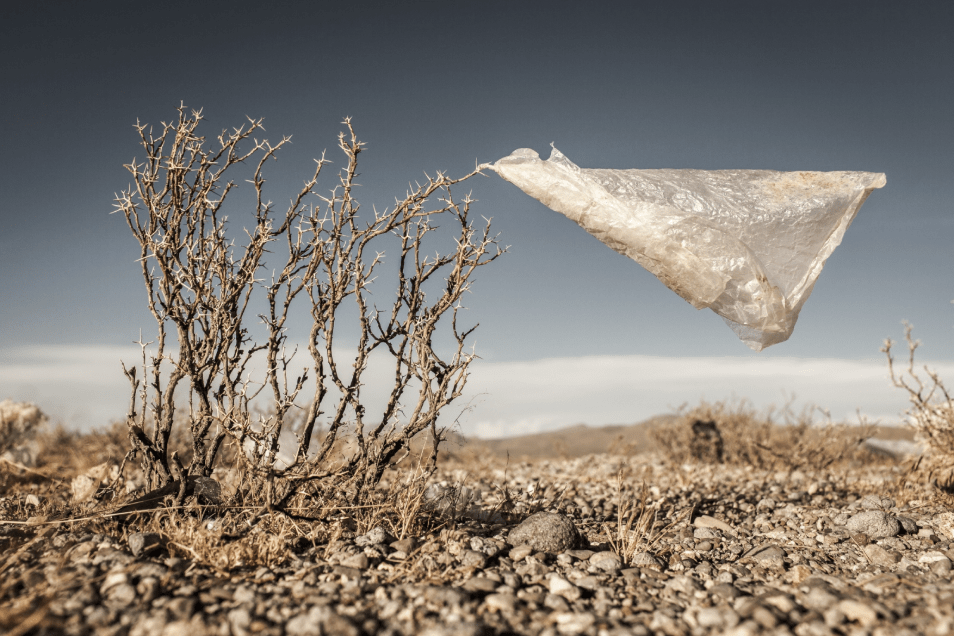
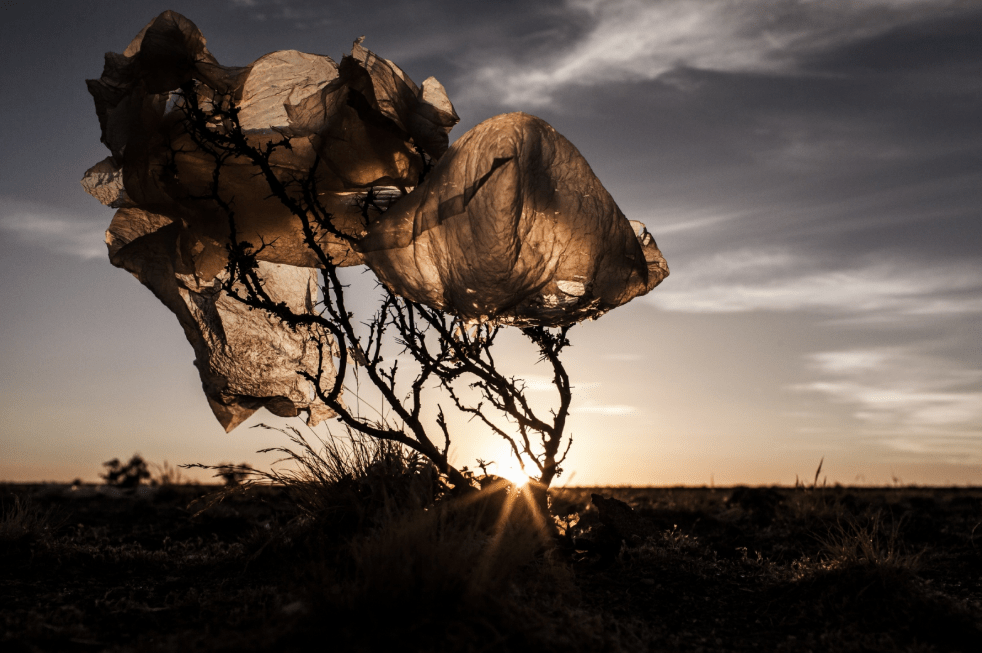
Eduardo did a series in 2015 called “Plastic Trees ” where he travelled to the Bolivian Altiplano, a vast landscape where millions of plastic bags get stuck on bushes and branches, damaging said landscapes. He did this in order to bring awareness to the problem at hand, he wanted to call attention to the affect that waste causes. Not only to the landscape around us but also to the wildlife.

The Guinness Book of World Records stated that plastic was “the most ubiquitous consumed item in the world” as plastic bags may be useful, they are also the main source for pollution – since the majority of plastic bags are not biodegradable and are made of a durable material that can last in the environment for years on end, it does a lot of damage to the environment. Plastic bags are the most common source of pollution, being found in: the ocean, on the street and on the shoreline. It can also be found nearly anywhere over the world – the Artic or even Mount Everest.

Image result for eduardo leal plastic sea
Plastic Sea | Eduardo Leal

The other topic in his “Plastic” series is “Plastic Sea” where he went to a remote beach near the Colombian Darien Gap – no people inhabit the area, however a large amount of plastic washes up to the shoreline.

More than 448 million tons of plastic are produced each year, out of that around 5.3 million to 14 million tons enters the ocean. This means that one garbage truck is dumped into the ocean every minute, plastic can take around 400 years to decompose which only worsens the situation. By around 2050 there will be more plastic in the ocean than fish – by weight. Plastic is the most common element found in the oceans and it’s presence kills more than 1 million seabirds and 100,000 marine animals die due to ingestion and entanglement of plastic.

Ai Weiwei

Image result for ai weiwei triptych
Dropping a Han Dynasty Urn (1995)

Born in Beijing, Ai Weiwei grew up in difficult circumstances; his father Ai Qing – a poet, was persecuted and exiled to a western province by the Chinese Communist government. This happened during the Anti-Rightist movement, which was campaign during 1957 that was a reaction against the Hundred Flowers Campaign which had promoted pluralism of expression and criticism of the government. Qing was persecuted after defending Ding Ling and was then accused of “rightism“.

Din Ling was a woman placed under house arrest in Shanghai however, she escaped and made her way to Yan’an. There she became one of the most influential figures in Yan’an cultural circles.

After the death of Mao Zedong in 1976, Ai Qing was hailed as a great national poet.

“It’s powerful only because someone thinks it’s powerful and invests value in the object”

– Ali Weiwei

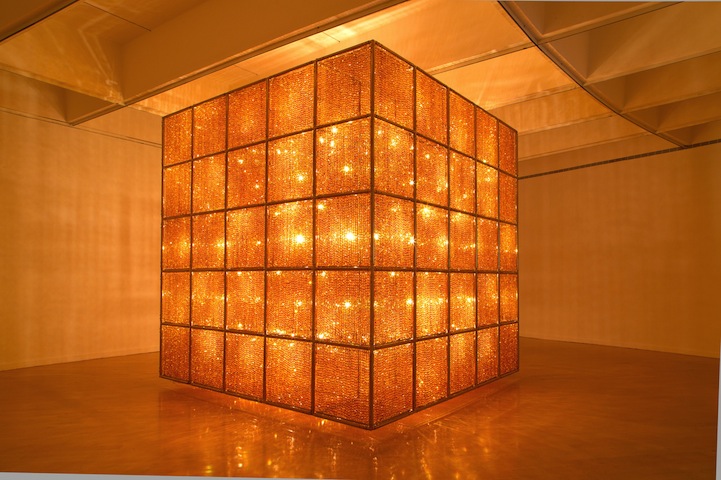
One of Ai Weiwei’s most notorious pieces “Dropping a Han Dynasty Urn” incorporates what Ai has called a “cultural readymade” as a big inspiration to him was Marcel Duchamp’s “readymades” which caused Ai to develop great appreciation towards his work.

Image result for marcel duchamp readymade
Marcel Duchamp | Bicycle Wheel

In his piece, Ai drops a 2,000 year old ceremonial urn. Despite it’s considerable value, it also symbolic and cultural worth. The Han dynasty (206 BC – 202 CE) was considered a defining period in Chinese civilisation, so for Ai to deliberately allow this priceless artifact to shatter at his feet was the equivalent to him throwing away the inheritance of cultural meaning about China.

This piece sparked outrage with some people as it was seen as a careless act, to simply destroy something with such high value. Some people calling him out for doing so, however Ai simply countered with “Chairman Mao used to tell us that we can only build a new world f we destroy the old one” which refers to the widespread destruction of antiques during China’s Cultural Revolution (1966-1976) and the instruction that in order to build a new society one must destroy the si jiu (Four Olds) : old customs, habits, culture and ideas. Therefore, when Ai let’s go of the urn, he let’s go of the cultural and social structures that impart value.

Image result for ai weiwei art
Refugee life jackets, Berlin

During the beginning of 2016, Ai created a new piece that caught a lot of attention. Throughout the previous year, he visited Lesbos which was renowned for a gateway for refugees into Europe. There, he got his hands on a total of 14,000 discarded life jackets after the authorities provided them.

Once he had the life jackets, he went to Berlin and strung up all the vibrant orange jackets on the pillars of the Konzerthaus venue overnight. In 2015, over 1 million migrants arrived in Europe by the sea routes, then in January 2016 more than 400 had perished in their desperate attempt to get across.

Image result for cube light ai weiwei
Image result for ai weiwei new york
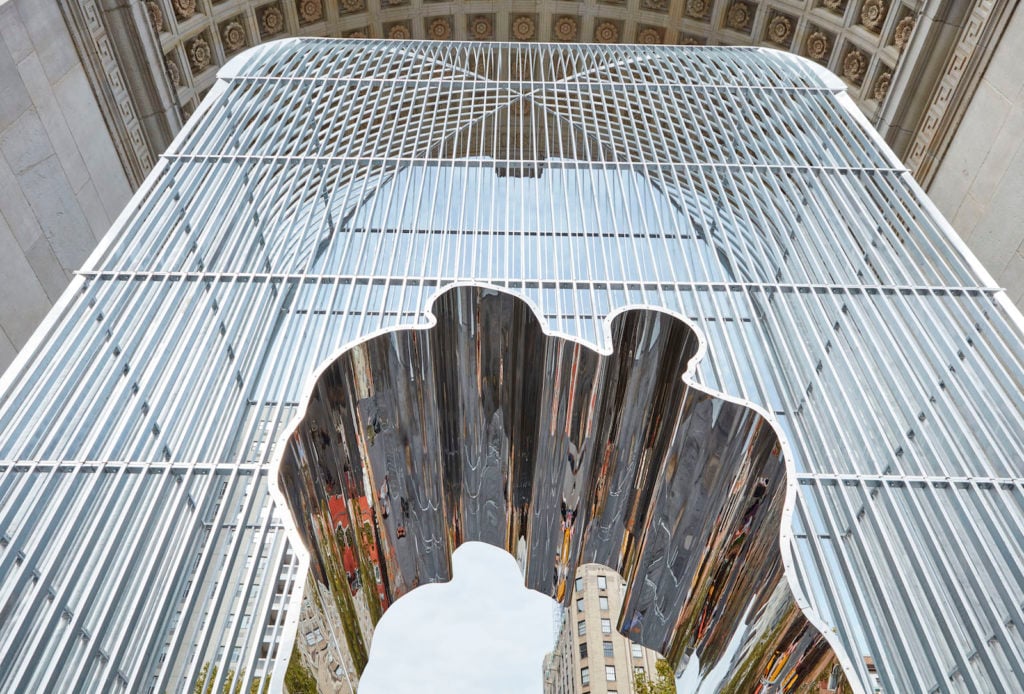
Arch, New York [2017]

Ai’s piece in New York – “Arch” is one of a series of pieces scattered around, the series being based around refugees and immigrants.

Peter Essick

The Albian Sands Tailings Pond, Canada

Peter Essick is a photographer who specialises in environmental photojournalism – his main focuses being nature/environmental themes. He is also an author, drone pilot and a speaker, he was named one of the most 40 most influential nature photographers in the world by Outdoor Photography Magazine UK.

Essick has been influenced by many noted American landscape photographers such as Carleton Watkins to Robert Adams.

Image result for carleton watkins photographs
Carleton Watkins
Image result for robert adams photography
Robert Adams

Essick is also an author of two books, that contain his pieces “The Ansel Adams Wilderness” and “Our Beautiful, Fragile World ” he has had a solo exhibition showcasing his work at the Booth Western Art Museum, Yoho National Park: A Canadian Gem, Lumière Gallery and at Compositions in Nature.

He has photographed stories for National Geographic on several occasions revolving around different environmental issues such as climate change, high-tech trash, nuclear waste and freshwater. Other pieces of his work have been published in international magazines.